
Smyrna Wood Flooring offers screen and recoat hardwood floor service in Smyrna, GA, built on more than 20 years of wood floor work, serving surrounding cities including Vinings, Fair Oaks, Mableton, Marietta and Austell. A screen and recoat renews a dull, lightly scratched floor by abrading the existing finish and applying a fresh coat, without sanding into the wood itself.
For many floors, it is the smartest money spent on hardwood. It costs a fraction of a full refinish, usually takes a day or two, creates very little dust, and leaves the wood untouched for future sandings. Done on a regular schedule, it can keep a floor from ever needing the full sanding that removes wood each time.
The catch is that it only works on the right floor. The finish has to be intact, clean enough to bond, and free of damage that reaches the wood. We check all three before recommending it, and when a floor needs a full sanding instead, we say so plainly.
When a Recoat Is the Right Call
Dull Finish and Fine Scratches
A floor that has lost its shine, with fine scratches and scuffs that sit in the finish rather than the wood, is the ideal candidate. These are the everyday marks left by shoes, chair legs and pets, and a fresh coat fills and hides most of them.
We look at the floor at a low angle with a light to see where the scratches sit. If they are in the finish, a recoat will make them disappear; if they reach the wood, they will still show afterward.
Traffic Lanes Before They Wear Through
Traffic lanes, the paths from the kitchen to the back door or down a hallway, show wear first. When the finish there is thin but still intact, a recoat restores it before the wood is exposed.
Once a lane has worn through to bare, gray wood, a recoat can no longer fix it evenly, because new finish over bare wood looks different from finish over finish. Catching lanes early is what makes the recoat work, and it saves the cost of a full sanding.
Keeping Engineered Floors in Service
Engineered floors with a thin wear layer may have only one full sanding in them, or none. For these floors, regular screen and recoat is the main way to keep them looking good without spending that limited wear layer.
We check the engineered wear layer at a vent or threshold before advising. On a thin one, we recommend recoating on a schedule, so the floor never reaches the point where only a replacement will help.
When a Floor Needs More Than a Recoat
Damage That Reaches the Wood
Deep scratches, dents, gray water stains, pet urine stains and sun fade that has changed the wood’s color all sit in the wood, not the finish. A recoat seals over them but does not remove them.
If those are the problems that bother you, a full sanding is the right answer. We explain the difference on your own floor, so you are not paying for a recoat that leaves the marks you wanted gone.
Color Changes
A screen and recoat keeps the existing color exactly as it is. It cannot lighten orange oak, change a honey tone to gray, or cover a stain color you no longer like.
Changing color always means sanding back to bare wood and applying new stain. If a new look is the goal, we point you to a full refinish and check first that enough wood remains above the tongue.
Wax, Polish and Adhesion Problems
Floors that have been cleaned with wax, acrylic polish or some oil soaps can carry residue that prevents a new coat from bonding. Many factory finishes on prefinished floors are also very hard and resist new coats without special preparation.
We test for these before recoating, and we clean with products designed to remove residue. Where adhesion is doubtful, we tell you before starting, because a peeling recoat costs more to fix than doing the right job the first time.
How the Recoat Is Done
Screening the Existing Finish
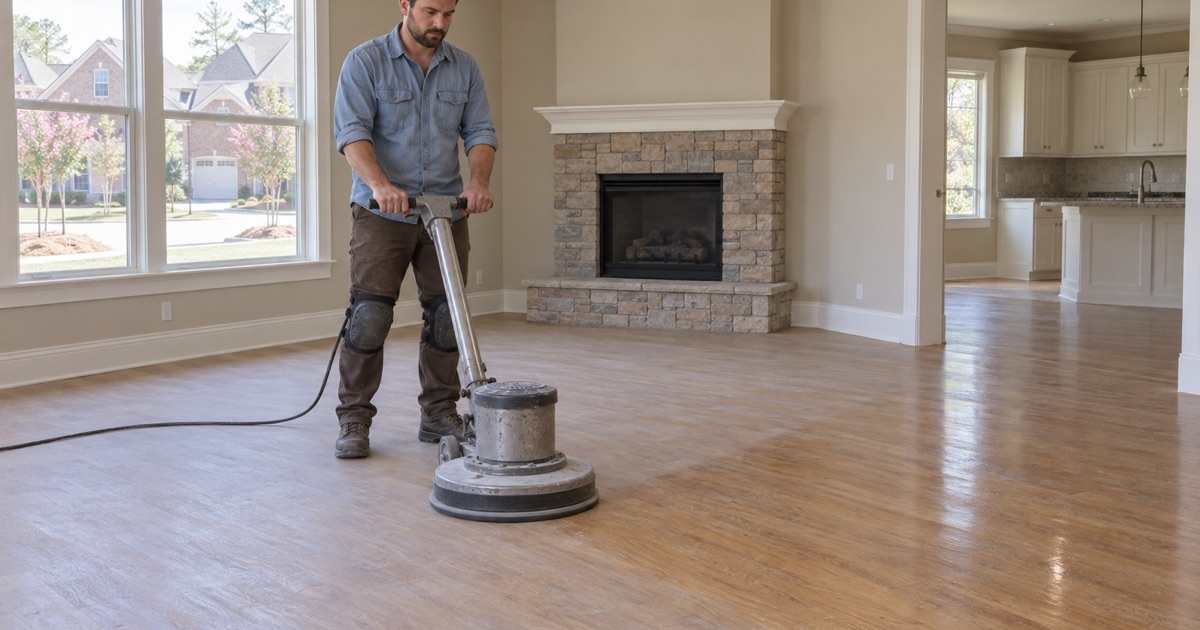
We abrade the whole floor with a buffer fitted with a fine screen or pad, which dulls the old finish just enough for the new coat to grip. Edges and corners are abraded by hand, since the buffer cannot reach them.
This step creates fine dust rather than the heavy dust of a full sanding, and we vacuum and tack the floor thoroughly afterward. Any dust left behind shows up as specks in the new finish.
Choosing the Topcoat
We usually recoat with a waterborne polyurethane, which dries quickly, stays clear and has low odor. The new coat has to be compatible with what is already on the floor, so we match the product to the existing finish.
You can also change the sheen level during a recoat, for example from a glossy finish to satin or matte. A lower sheen hides scratches and dust better, which many families prefer.
Drying and Returning to Use
A recoat typically takes a day for most homes, with light foot traffic possible within hours on a waterborne finish. Furniture can usually go back on felt pads the next day or the day after.
Rugs should wait longer while the finish cures. We leave you with care instructions and a suggested recoat interval, so the floor stays protected and the next visit is another recoat rather than a full sanding.
Recoats in Busy and Shared Homes
Townhomes, Condos and Rentals
Because a recoat produces little dust and odor and finishes quickly, it works well in townhomes, condos and occupied rentals. Any interior flooring rules come from your own declaration, so we confirm the association’s written approval where it applies.
For landlords, a recoat between tenants restores the look of a floor without the cost and downtime of a full refinish. It is one of the simplest ways to keep a wood floor rent-ready year after year.
- 20+ Years on Wood Floors
- Moisture Readings Before Repairs
- Stain Samples on Your Floor