Cupping and Buckling From Summer Humidity
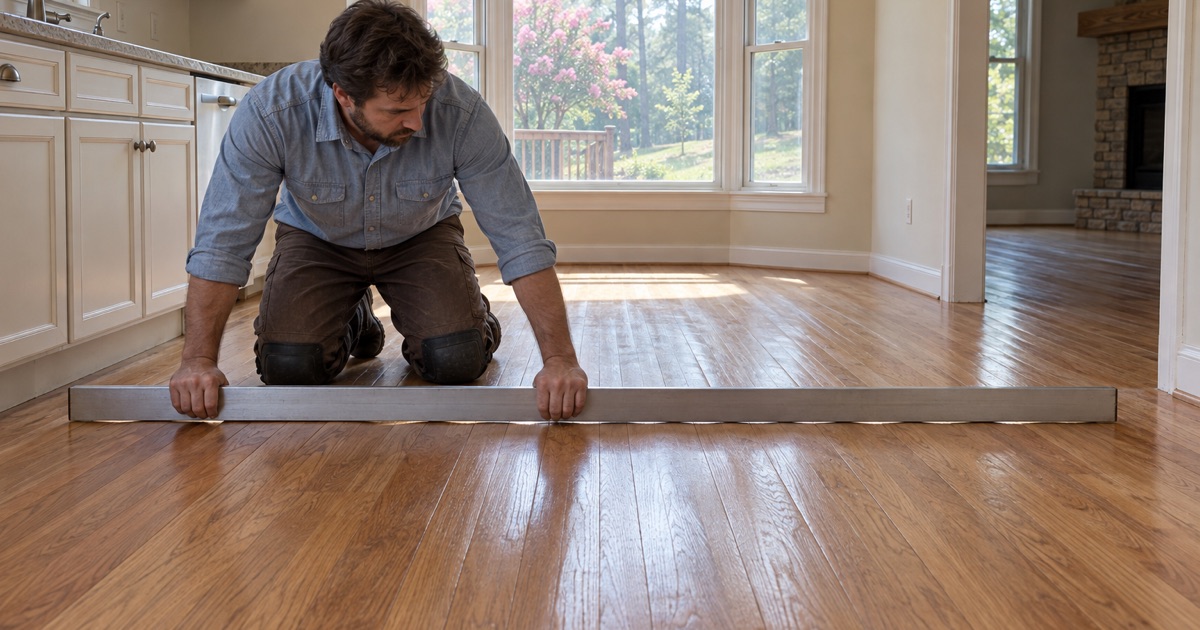
Cupping means board edges stand higher than their centers, and it almost always traces to moisture under or around the wood. We read the floor and the subfloor with a moisture meter, find the source, and let the boards settle before sanding. Buckling, where boards lift off the subfloor, gets the same diagnosis before any repair.
A spot that gives when you step on it, or a musty smell in one corner, points to moisture or rot in the subfloor or a joist. We open the floor where the signs are, find out how far the damage runs, and replace the wood that has failed. Covering a soft spot only moves the problem to the next board.
Termite Damage Found Under Carpet
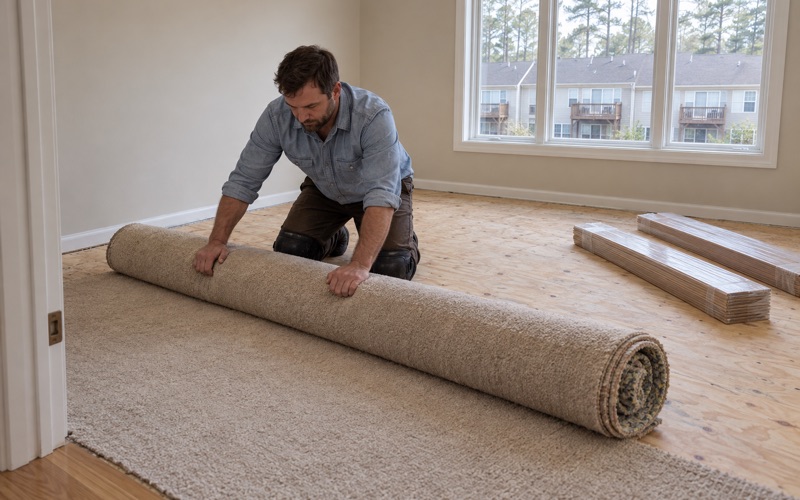
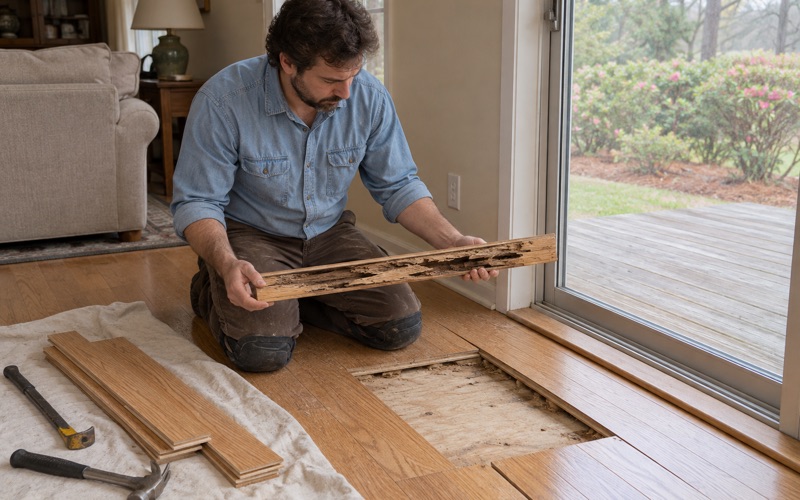
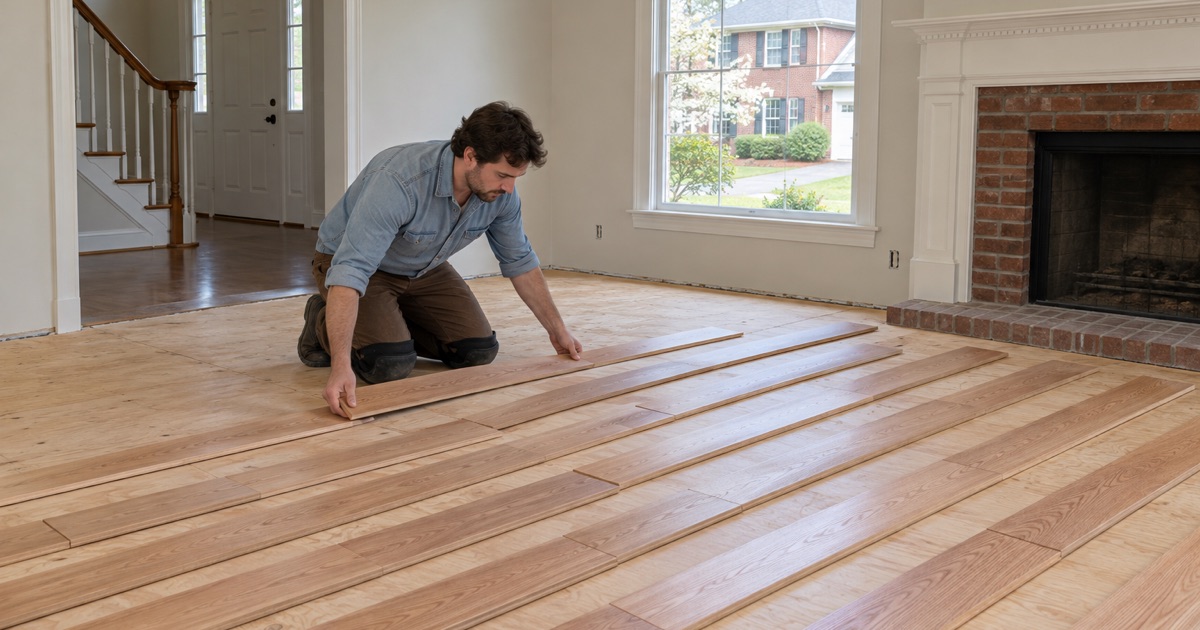
Pulling up old carpet sometimes reveals boards riddled by subterranean termites, mud tubes along the baseboard, or a hollow sound underfoot. Once the pest control company has treated, we cut out every damaged board and weave in new ones. Filling or covering termite damage leaves weak wood waiting to fail.
Leaks From a Washer, Dishwasher or Supply Line
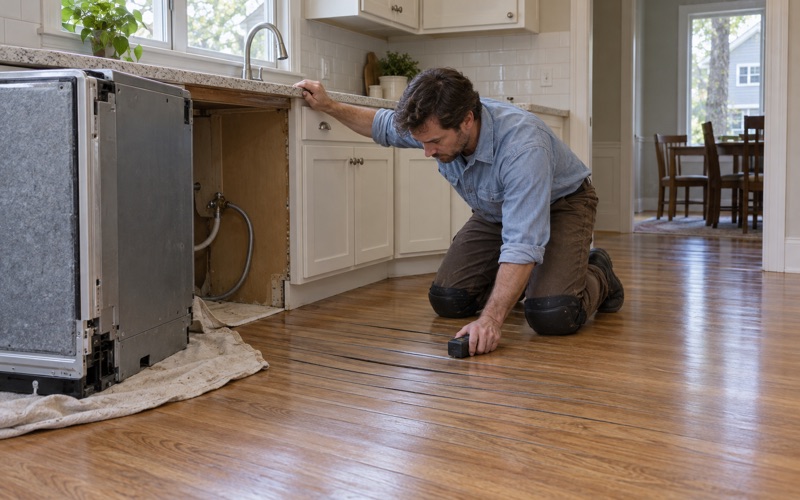
Appliance and plumbing leaks soak the floor from underneath, where you cannot see how far the water went. We trace the wet area with a moisture meter, dry it down, and replace only the boards that stay damaged. Every reading is documented room by room for your adjuster.
Black Pet Urine Stains
Pet urine that sits long enough reacts with oak and turns black, and the stain often runs deeper than sanding can reach. We sand first to see how far it goes, then replace the boards that stay dark. Blended into the surrounding floor, the repair disappears under the new finish.
Splintering Boards Over No Subfloor
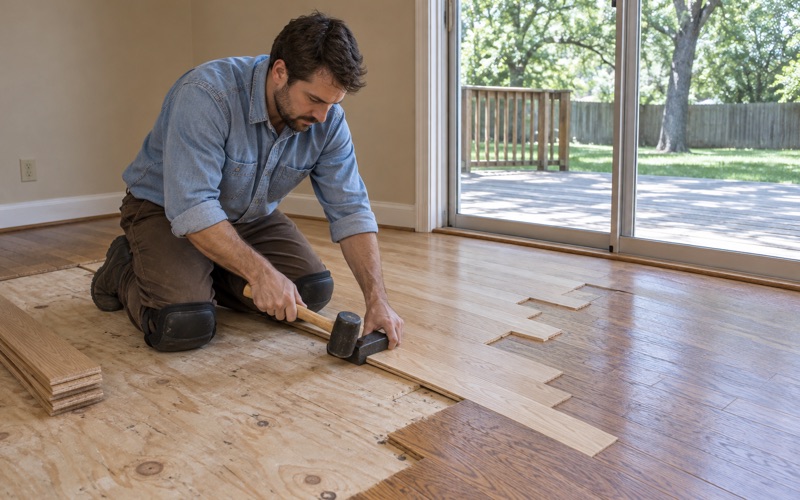
Some older homes have strip flooring nailed straight to the joists with no subfloor below, and those boards flex, gap and splinter. We replace splintered boards and secure loose ones, and we explain when the lack of a subfloor limits what any refinish can fix. That tells you whether to repair now or plan a bigger job.
Floors Sanded Too Thin
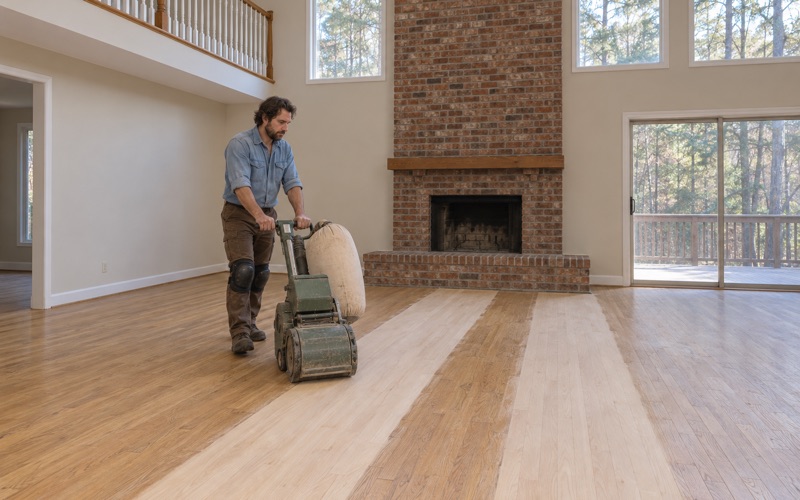
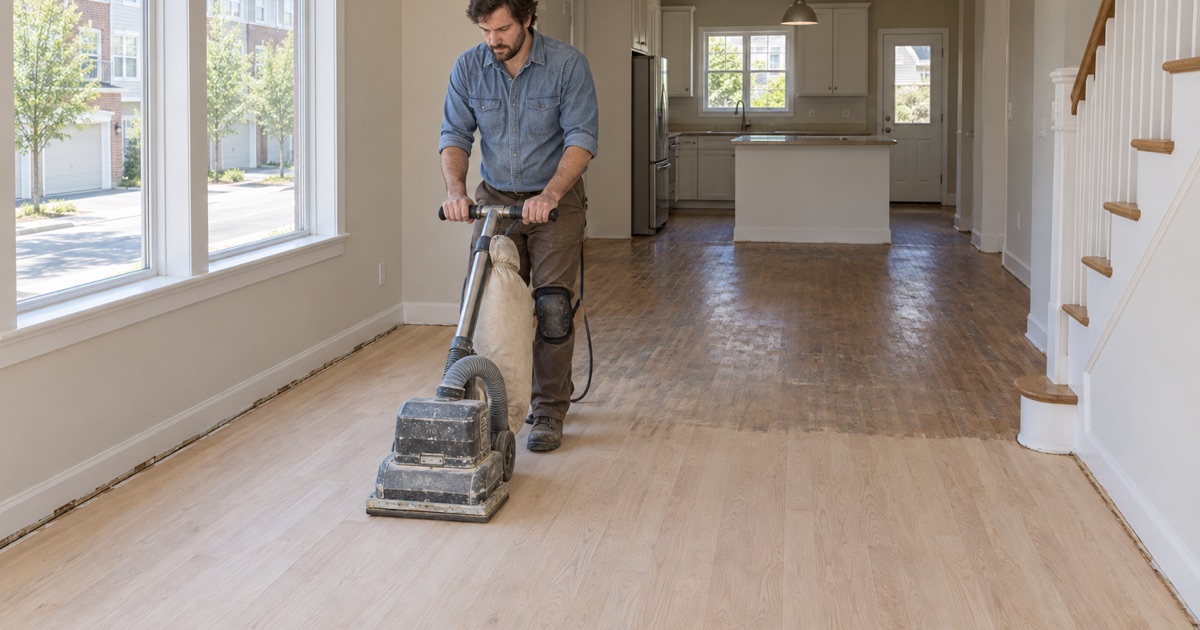
Every full sanding removes wood, and a floor refinished too often can show nail heads or the tops of tongues. We measure the remaining wear before quoting, and where a floor has nothing left to sand, we recommend a screen and recoat or targeted replacement. Sanding through the last layer turns a refinish into a replacement.
Squeaks, Board Gapping and Loose Boards
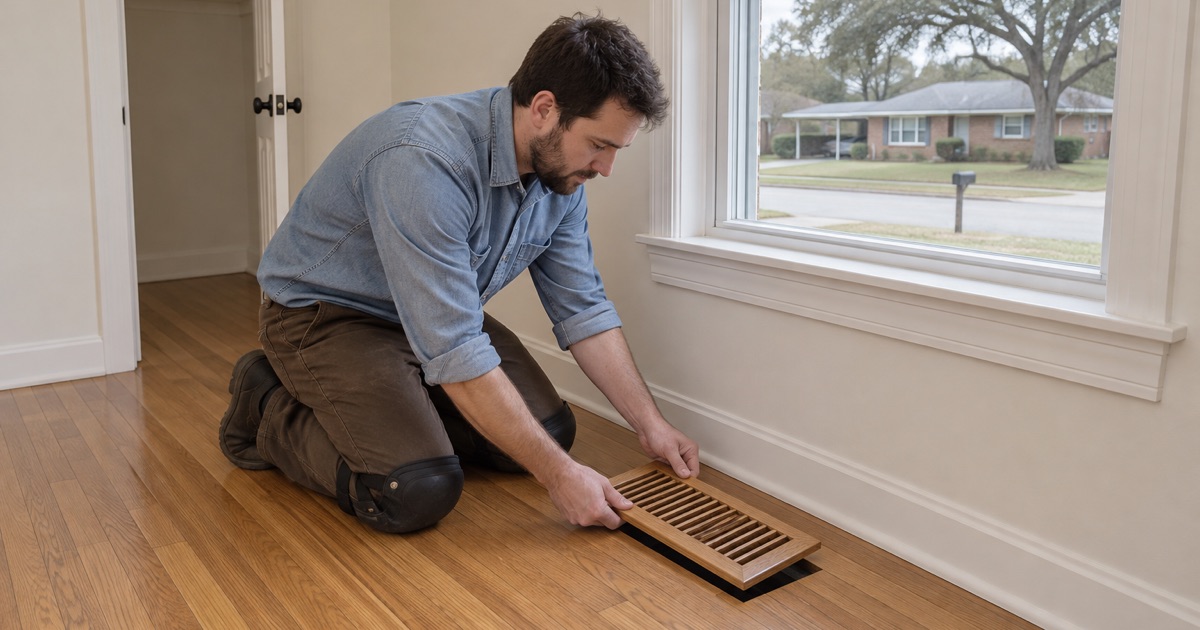
Squeaks come from boards rubbing on fasteners, and gaps open as wood dries out in winter. We secure loose boards from above or below, and we tell you which gaps are seasonal and will close again. Filling a seasonal gap in winter can push boards into buckling when humidity returns.
Scratches, Dents and Worn Traffic Lanes
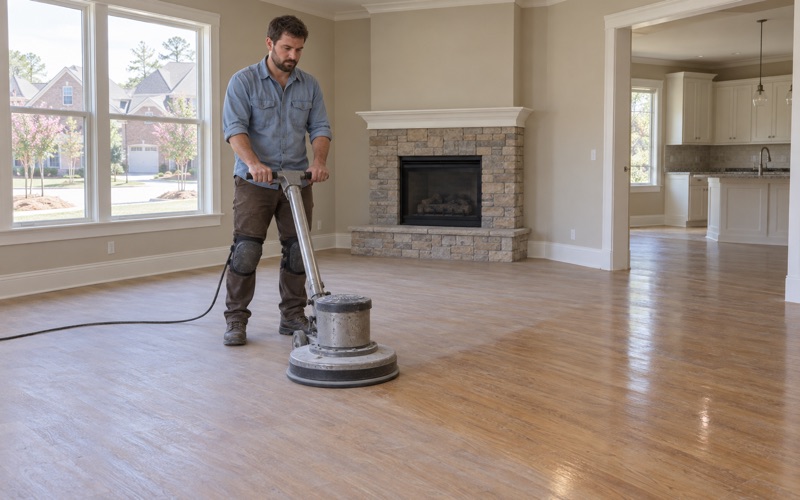
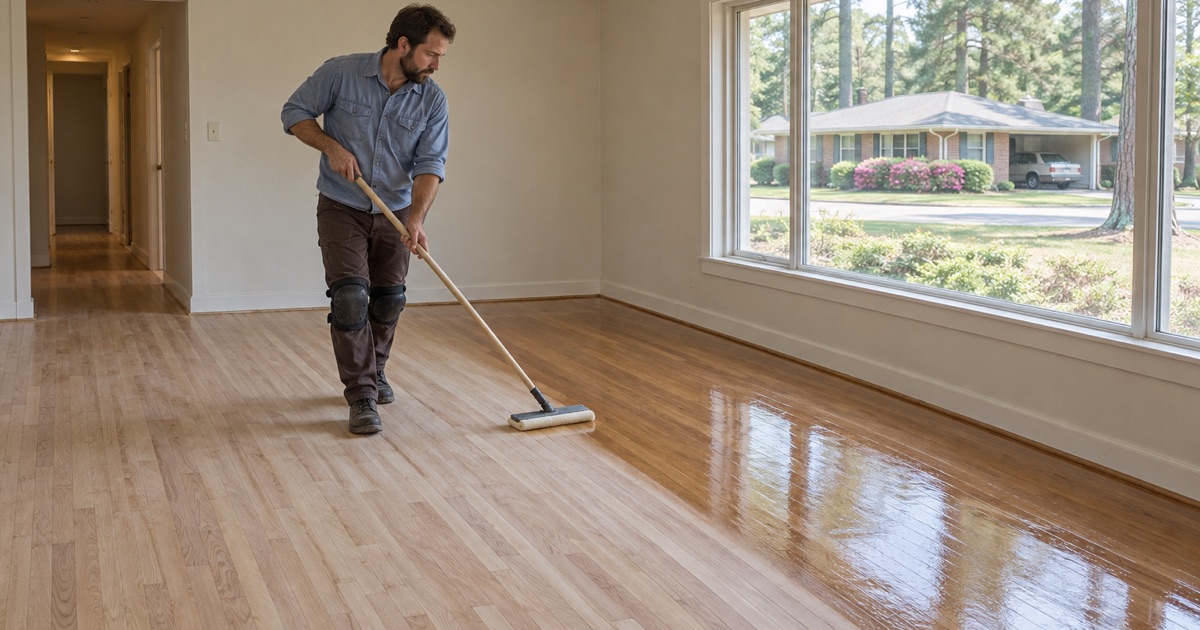
Traffic lanes show where the finish has worn to bare wood, while dents and deep scratches reach into the boards themselves. Surface wear on sound finish often needs only a screen and recoat; worn-through lanes need a full sanding. We show you the difference on your own floor before you choose.
Noise Complaints From the Unit Below
In a condo or stacked townhome, hard floors carry footsteps into the unit below. We plan new floors around the acoustic underlayment your building requires and the rules in your declaration. Getting that right before installation is far cheaper than tearing up a floor after a neighbor complains.